Is Limewash Paint a Natural Paint?
Is Limewash Paint a Natural Paint
Limewash paint is widely valued as a natural wall finish because it is traditionally made from slaked lime, mineral pigments, and water. For Australian homes and design projects, it offers a soft, breathable, low sheen surface with depth. Standard flat paint often cannot match this. Brands such as larosacolours.com.au help bring this old world finish into contemporary interiors. Their limewash colours are suited to relaxed, textured spaces.
What makes limewash paint natural?
Limewash paint is considered natural when its formula is based on lime and mineral ingredients rather than synthetic resins or plastic like film formers. The lime comes from limestone that has been processed into slaked lime, then blended with water and pigments to create a wash that bonds into porous surfaces. Because it soaks in rather than sitting on top as a sealed coating, the finish feels more like part of the wall. It does not feel like a separate layer of paint.
That said, not every product labelled limewash is identical. Some modern formulas may include additives for durability, adhesion, or application ease. So, it is always worth checking the product details if a fully natural finish is important to you.
The beauty is in the limewash texture
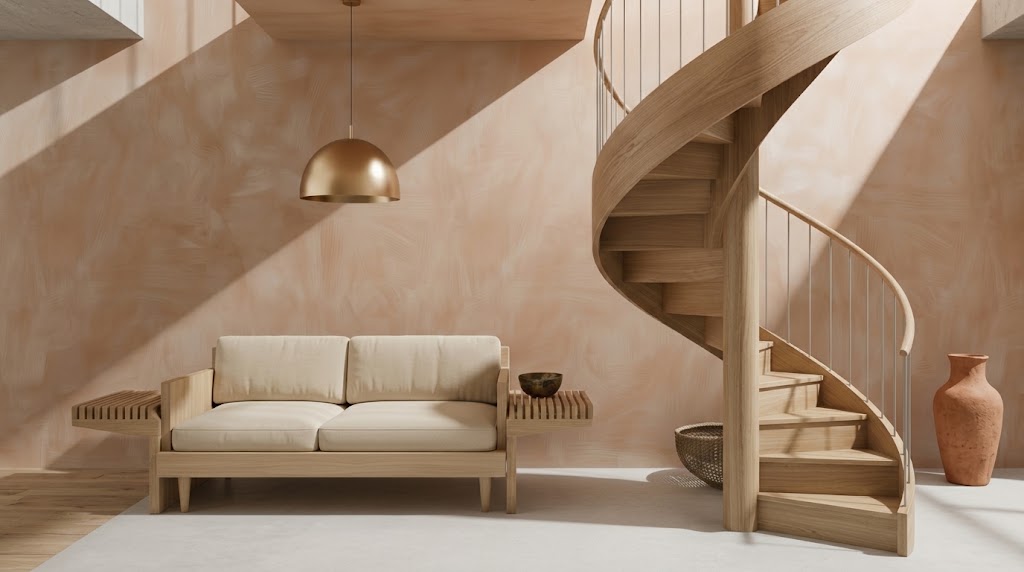
The distinctive limewash texture is one of the main reasons people choose it. Instead of a perfectly uniform surface, limewash creates gentle movement, tonal variation, and a cloudy mineral depth that changes subtly with light. This makes it especially effective in bedrooms, living areas, dining spaces, and feature walls where warmth and atmosphere matter.
Unlike a decorative effect that looks artificial, limewash has an organic quality. Brush marks, layering, and absorbency all influence the result, which means each wall has its own character. In Australian interiors, this can work beautifully with timber, stone, linen, concrete, and other natural materials.

Choosing limewash colours for Australian spaces
Limewash colours often look softer and more nuanced than conventional paint colours because mineral finishes interact with light differently. Warm whites, clay tones, muted pinks, sandy neutrals, olive greens, and smoky greys can all suit the Australian market, depending on the architecture and natural light.
Before choosing a shade, consider:
- Natural light: Bright Australian sunlight can make pale tones feel crisper and stronger during the day.
- Room mood: Warm neutrals feel calm and earthy, while deeper tones add drama and intimacy.
- Existing materials: Match undertones with timber floors, stone benchtops, tiles, and soft furnishings.
- Wall condition: Highly textured or porous surfaces may affect how the colour settles.
- Sample testing: Always test limewash paint on the actual wall before committing to a full room.
Is limewash right for every wall?
Limewash is best suited to surfaces that allow it to absorb and bond properly, such as masonry, render, plaster, and appropriately prepared walls. On non porous or previously painted surfaces, a suitable primer or preparation system may be needed. This is where product guidance matters, especially when choosing limewash for use in Australia’s varied climates and home styles.
It may not be the best choice for every high-splash or heavy wear area unless the product is designed or sealed for that purpose. For many interior spaces, however, it offers a beautiful balance of natural appearance, breathable character, and timeless texture.
A natural finish with modern appeal
So, is limewash paint a natural paint? In its traditional form, yes: it is one of the most enduring mineral based wall finishes available. Its appeal comes from more than its ingredients, though. With the right preparation, thoughtful limewash colours, and an appreciation for subtle limewash texture, it can make Australian interiors feel calm, tactile, and deeply connected to natural materials.