Is Limewash Paint Breathable?
Understanding the Breathability of Limewash Paint
Limewash paint is often chosen for its soft mineral finish, natural character, and ability to work with the surface beneath it rather than sealing it off. If you are comparing finishes for plaster, brick, stone, or older walls, breathability is one of the biggest reasons limewash stands apart. This guide explains what breathable paint means, why it matters, and how to decide whether limewash is the right fit for your space.
Is Limewash Paint Breathable?
Yes, limewash paint is breathable because it is made from lime and water based mineral ingredients that allow moisture vapor to pass through the surface. Instead of forming a tight plastic like film, limewash bonds with porous materials and lets walls release trapped moisture naturally. That is why the question “Is Limewash Paint Breathable?” comes up so often among homeowners, designers, and preservation minded renovators.
Breathability does not mean the wall becomes waterproof or maintenance free. It means the coating supports vapor movement, which can help reduce moisture buildup when used on suitable surfaces. This is especially valuable in older homes, masonry buildings, humid rooms, and spaces where trapped dampness can affect comfort or finish longevity.

What breathability means in a wall finish
A breathable paint allows water vapor to move through it rather than trapping it behind a sealed surface. Many modern paints create a film over the wall. That film can be useful in some situations, but on porous materials it may also block moisture from escaping.
Limewash behaves differently. It soaks into absorbent surfaces and becomes part of the mineral substrate as it cures. This creates a matte, textured look while keeping the surface open to vapor movement. The result is a breathable paint that feels organic and visually layered instead of flat and uniform.
For practical purposes, breathability matters most when the wall itself needs to “manage” moisture. Brick, lime plaster, stone, and other mineral surfaces can absorb and release moisture depending on the room conditions. A compatible coating should respect that movement rather than fight it.
Why limewash is considered an eco-friendly paint
Limewash is often described as an eco friendly paint because of its simple mineral composition and low-impact aesthetic. Traditional limewash is made primarily from slaked lime, water, and mineral pigments. It does not rely on a heavy synthetic film to create coverage, and its natural matte appearance can reduce the need for layered decorative treatments.
Its eco appeal also comes from how it ages. Limewash develops a patina over time, so gentle fading or variation is often part of the charm rather than a defect. In many settings, small touch ups can blend into the finish more naturally than they would with glossy or high build coatings.
That said, “eco friendly” can vary by product. If sustainability is a priority, check the specific formulation rather than relying only on the word limewash. Look for clear ingredient information, low odor claims, responsible pigment choices, and application guidance that matches your surface.
Where breathable paint makes the biggest difference
Breathable finishes are most helpful where moisture movement is already part of the building’s behaviour. In these spaces, limewash can support the natural performance of mineral surfaces while adding colour, softness, and depth.
Common places where limewash may be useful include:
- Historic or older homes: Traditional walls often use plaster, brick, or stone that benefits from vapor open coatings.
- Masonry interiors: Limewash can complement the absorbent nature of brick, block, and stone.
- Plaster walls: Mineral based plaster and limewash tend to work well together when the surface is properly prepared.
- Rooms with changing humidity: Breathability can help surfaces release moisture vapor instead of holding it under a sealed film.
- Design focused spaces: The cloudy movement and mineral variation create a finish that feels handcrafted, not manufactured.
The key is compatibility. Limewash performs best on porous, mineral surfaces. If the wall is already coated with a nonporous acrylic, oil based paint, or glossy sealer, the limewash may not bond or breathe as intended without proper preparation.
How does limewash compare with conventional paint?
Limewash differs from conventional paint in both performance and appearance. Standard interior paint usually sits on top of the wall and creates a uniform film, while limewash penetrates suitable surfaces and cures into a mineral finish. This difference affects breathability, texture, durability expectations, and the overall look.
Conventional paint is often chosen for strong color consistency, scrubbability, and easy coverage over many substrates. Limewash is chosen for softness, movement, mineral depth, and vapor openness. Neither option is automatically better; the right choice depends on the surface, room conditions, and desired finish.
A helpful way to think about the difference:
- Choose limewash when you want a natural matte look, subtle tonal variation, and a vapor open finish on a porous surface.
- Choose conventional paint when you need a highly washable, uniform, film forming coating on drywall, trim, or previously sealed surfaces.
- Choose a specialty mineral paint when you want some mineral qualities but need a product designed for a broader range of substrates.
If you are asking, “Is Limewash Paint Breathable” because you are dealing with damp walls, remember that paint alone does not solve moisture problems. Leaks, poor ventilation, rising damp, or exterior drainage issues should be addressed before any decorative coating is applied.
Surface preparation matters
Even the best breathable paint can fail if it is applied to the wrong surface. Limewash needs a receptive base. Dust, grease, sealers, glossy paint, and incompatible primers can interfere with absorption and bonding.
Before applying limewash, consider this preparation checklist:
- Confirm the surface is porous enough to accept limewash.
- Remove loose paint, dust, residue, and flaking material.
- Repair cracks or damaged plaster with compatible materials when possible.
- Avoid sealing the wall with non breathable primers unless the limewash system specifically requires it.
- Test a small area to evaluate absorption, colour, texture, and adhesion.
- Follow the manufacturer’s instructions for dilution, coats, drying time, and curing.
Testing is especially important because limewash changes as it dries. It may look darker when wet and lighter once cured. The final effect can also vary depending on surface porosity, application technique, number of coats, and lighting.
The look is part of the performance
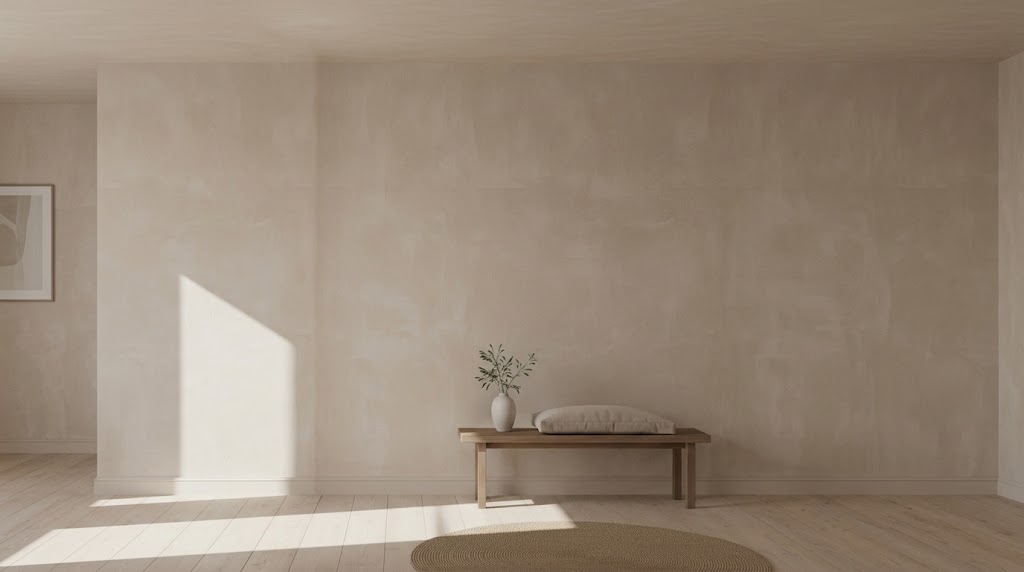
People often discover limewash because they love the aesthetic, then learn that breathability is part of what creates that look. Since limewash interacts with the surface rather than simply covering it, the finish has movement. Brush marks, cloudy depth, and mineral variation are normal and often desirable.
This character can make a room feel warmer and more relaxed. It works well in interiors that use natural materials, muted colours, old world textures, or minimalist palettes that need subtle visual interest. The finish can be elegant without feeling polished, which is one reason it remains popular in both traditional and contemporary design.
However, limewash is not ideal for every taste. If you want a perfectly even, wipe-clean surface with no tonal variation, a standard interior paint may be a better match. Limewash rewards people who appreciate texture, patina, and the slight unpredictability of natural materials.
Choosing limewash with confidence
Limewash paint is breathable, beautiful, and practical when it is used in the right context. It is especially well suited to porous mineral surfaces where vapor movement matters and where a soft, matte, lived-in finish is desired. As an eco friendly paint option, it also appeals to people who prefer simple materials and a more natural look.
The most important step is to match the finish to the wall. Check the existing surface, address moisture issues first, and test before committing to a full room. When those basics are handled, limewash can offer something many modern coatings cannot: a breathable finish with depth, texture, and a quiet sense of permanence.