What is Limewash paint and how it works?
Limewash paint and how it works
Limewash is a mineral based wall finish known for its soft movement, natural texture, and beautifully matte appearance. Understanding Limewash paint and how it works helps you choose the right surface, colour, and application method before you begin. Whether you are planning a calm neutral interior, exploring pink limewash paint, or comparing options for limewash Australia, the key is knowing what makes this finish different from standard paint.
What is limewash paint?
Limewash paint is a breathable coating made with lime and mineral pigments, designed to soak into suitable porous surfaces rather than simply sitting on top. As it dries, it creates a chalky, tonal finish with subtle variation from brush movement, absorption, and layering. This is why limewash feels less flat than conventional acrylic paint and more connected to the surface underneath.
The finish is often chosen for interiors where people want warmth without heavy pattern. It can make a plain wall feel considered, soft, and architectural. Because it has natural movement, it works especially well in bedrooms, living rooms, dining spaces, feature walls, and relaxed commercial interiors where texture matters.

How limewash creates its signature finish
Limewash works through absorption and carbonation. In simple terms, the diluted lime coating bonds with a compatible surface as it dries, leaving a mineral finish that has depth rather than a plastic like film. The final look depends on the porosity of the wall, the number of coats, the brush technique, and the selected colour.
Unlike standard paint, limewash usually looks best when applied with visible, intentional brushstrokes. A block brush or wide brush can create soft clouds, cross hatched texture, or gentle directional movement. The result should feel organic, not perfectly uniform.
Key factors that affect the result include:
- Surface preparation: Porous, clean, and correctly primed surfaces usually accept limewash more evenly.
- Application style: Loose brush movement gives limewash its relaxed, layered character.
- Coat depth: Additional coats can deepen the colour and build more visible texture.
- Drying conditions: Airflow, temperature, and wall absorbency can influence how the finish settles.
- Colour choice: Darker and richer tones often show more movement, while pale tones feel softer and quieter.
Choosing limewash colours for your space
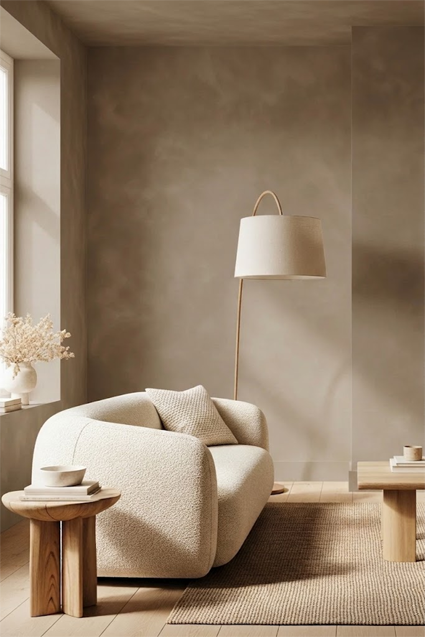
The best limewash colours are the ones that support the mood of the room, not just the trend of the moment. Warm whites, stone, sand, clay, beige, mushroom, and soft grey shades are popular because they create a natural background that still has depth. These colours work well when you want the wall to feel calm but not blank.
For a warmer, more expressive look, earthy terracotta, muted rose, ochre, olive, and taupe can bring character without feeling overly bright. A pink limewash paint can be especially effective when the pink is softened with mineral undertones, creating a gentle blush effect rather than a sugary or glossy finish. It can suit bedrooms, powder rooms, nurseries, creative studios, or any space where warmth and softness are the goal.
When selecting a colour, consider how it behaves across the day. Limewash can shift visually in changing light because of its texture and matte surface. A shade that looks subtle in morning light may feel richer in the evening, so sampling is always worth the extra step.
Is limewash suitable for Australian homes?
Limewash can be a strong choice for Australian interiors when the product, preparation, and surface are appropriate. People searching for limewash Australia or lime wash Australia are often looking for finishes that suit relaxed, light filled homes with natural materials and limewash fits that design language well. Its soft matte texture pairs beautifully with timber, stone, linen, rattan, concrete, and aged metals.
In bright Australian rooms, limewash can help reduce the harshness that sometimes comes from flat white walls and strong sunlight. Instead of reflecting light in a stark way, it adds visual softness and layered tone. For coastal, Mediterranean, farmhouse, modern organic, or minimalist spaces, the finish can create a lived in elegance without adding clutter.
If you are choosing a local supplier, look for clear guidance on surface preparation, primer compatibility, application tools, and aftercare. A colour focused brand such as la rosa colours can be mentioned naturally in the planning stage because the success of a limewash project depends heavily on colour selection and practical advice, not just the paint itself.
Can you paint over limewash?
Yes, can you paint over limewash is a common question, and the answer is generally yes, but preparation matters. Because limewash is mineral, matte, and often absorbent, you should not assume that a standard topcoat will behave the same way it would over acrylic paint. The wall may need cleaning, light sanding, sealing, or a suitable primer before repainting.
If the limewash is powdery, flaking, or uneven, address that first. Painting directly over an unstable surface can lead to patchy coverage or poor adhesion. If the finish is sound, a compatible primer can usually create a more reliable base for a new coating.
A simple repainting checklist:
- Check the surface: Rub the wall gently to see whether residue comes away.
- Clean carefully: Remove dust, marks, and loose material without soaking the wall.
- Repair imperfections: Fill cracks or dents and allow repairs to dry properly.
- Prime if required: Choose a primer suited to mineral or porous finishes.
- Test a small area: Confirm adhesion and appearance before painting the whole wall.
Practical tips before you start
Limewash rewards patience. It is not difficult in principle, but it behaves differently from standard paint, so the best results come from testing and working methodically. Rather than aiming for perfect sameness, aim for balance, movement, and a finish that feels intentional.
Before committing to a full room, create a sample board or test patch on the actual wall if possible. View it in morning, afternoon, and evening light. This is especially important with deeper tones and pink limewash paint, where undertones can change noticeably depending on furniture, flooring, and natural light.
Helpful planning tips include:
- Choose one feature wall if you want texture without overwhelming the room.
- Use limewash across all walls for a softer, more enveloping effect.
- Keep brushwork consistent so the finish feels calm rather than busy.
- Pair textured walls with simple furnishings to let the surface breathe.
- Avoid rushing between coats; drying time affects the final depth and movement.
The takeaway
Limewash is loved because it brings atmosphere, softness, and mineral character to walls in a way standard paint rarely can. It works by bonding with suitable surfaces and building gentle variation through colour, absorption, and brush technique. With thoughtful preparation, careful sampling, and the right limewash colours, it can transform a plain room into a space that feels warm, natural, and quietly refined.